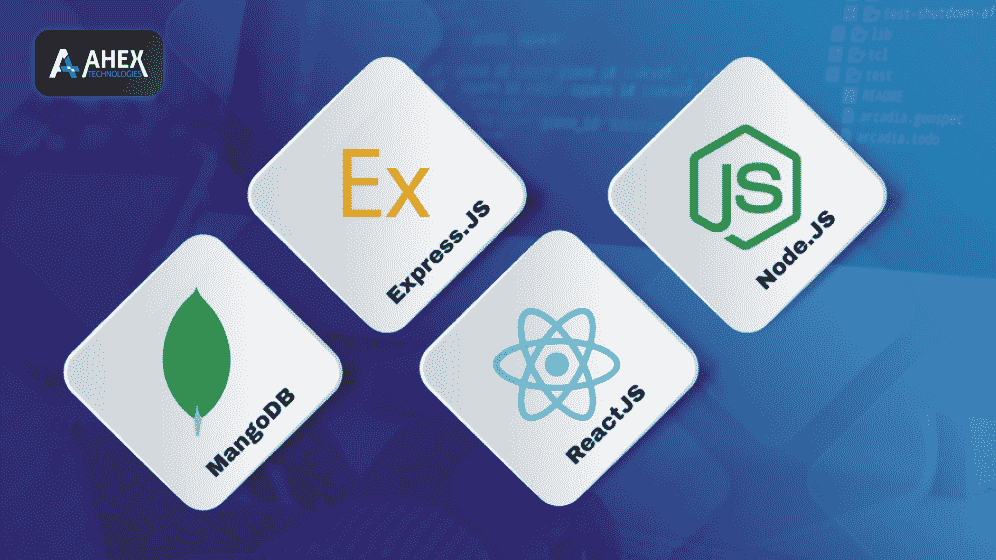













MERN Stack is a combination of MongoDB, Express.js, React.js, and Node.js used to build modern, full-stack web applications. It allows developers to use JavaScript across the frontend and backend, making application development more streamlined and flexible. At Ahex, we use the MERN Stack to develop scalable, secure, and high-performance web applications that meet different business requirements.
One team, one stack, no handoffs
Built to handle growth from day one
Fast, responsive, built for real users
Support that continues after launch
"They picked up an existing MERN codebase we'd struggled with for months and had it stable within weeks. Communication was direct, and they delivered on time."


More Than 150+ Brands
Building a modern web application requires more than connecting a frontend with a backend. It needs a well-structured architecture, reliable APIs, efficient data management, and an interface that can perform smoothly as users and business requirements grow.
Every web application has its different requirements, but MERN offers several advantages that make it a practical choice for building modern, scalable, and maintainable web solutions.
Powering Google, Amazon, BBC, Apple, Wikipedia, GitHub, and other websites on the open web.
We are a MERN stack development company that builds custom web apps, SaaS platforms, and enterprise systems for businesses. The following are the services we offer.
We build your web app from the ground up database, backend logic, and interface designed around how your business actually runs, not squeezed into a generic template. Every part of the stack is planned to work together instead of being patched on separately.
Custom architecture built around your workflow
MongoDB schema designed for your data
React interface built for real users, not demos
Node.js backend built to handle real traffic
Clean, documented code your team can build on later
For larger systems with more moving parts, more users, more data, more integrations we build applications that stay fast and stable as all of that grows. The architecture is planned upfront so scaling later doesn't mean rebuilding from scratch.
Role-based access and permission structures
Built to handle high concurrent traffic
Modular architecture for easier future updates
Secure APIs connecting internal systems
Performance tested under real load conditions
We build online stores that hold up during real traffic product catalogs, cart, checkout, and payments without slowing down when it matters most, like a sale or a product launch.
Fast-loading product and category pages
Secure checkout and payment integration
Real-time inventory and order tracking
Built to handle traffic spikes
Mobile-optimized shopping experience
If you're building a product other businesses will subscribe to, we handle the parts that make it actually work as a service account, permissions, billing, and the ability to support many customers on one system.
Multi-tenant architecture for multiple customers
Subscription and billing logic
Role and permission management
Secure, scalable cloud deployment
Built to support ongoing feature updates
We build the behind-the-scenes systems that connect your app to databases, payment providers, and other tools kept fast and secure, even when a lot of requests come in at once.
RESTful and GraphQL API development
Secure authentication and authorization
Third-party service integrations
Optimized for speed under heavy load
Clear documentation for easy maintenance
Using MongoDB, we structure your data so it stays organized and fast to retrieve as your app grows instead of slowing down or becoming difficult to manage over time.
Schema design suited to your data
Query optimization for faster load times
Data indexing for large datasets
Backup and recovery planning
Scalable structure as data volume grows
Once your app is live, our work doesn't stop there. We stay involved fixing bugs, applying security updates, and making small improvements so your app keeps running well long after launch.
Regular bug fixes and issue resolution
Security patches and dependency updates
Performance monitoring
Feature enhancements over time
Direct support when something needs attention
If you're working with an older system that's becoming hard to maintain, we rebuild it using MERN keeping your existing data and workflows intact while giving you a faster, easier-to-update foundation.
Migration without data loss
Improved speed and performance
Modern, maintainable codebase
Reduced long-term maintenance cost
Minimal disruption during the transition
Picking a development partner is a bigger decision than picking a tech stack. Here’s what businesses actually get when they work with us.
Developers matched to your project within days, not weeks
Every developer vetted through a technical screening process
A trial period before you commit long-term
Security practices that hold up for enterprise clients
Development hours that overlap with your time zone
Engagement models that flex full-time, part-time, or project-based
Cross-browser and cross-device support engineered from sprint one — not patched after a bug report.
Your React interface is tested against the latest Chromium builds, since this engine runs the majority of desktop and Android traffic worldwide.
We test rendering and touch behavior on real Apple devices, not just simulators, since Safari handles some CSS and JavaScript behavior differently from other browsers.
Your app is verified against Firefox's rendering engine so layout and functionality stay consistent, even for users who prioritize privacy-focused browsers.
Every screen built in React is tested across common breakpoints, so your app looks and works the same whether it's opened on a phone, tablet, or large monitor.
We test that React components announce themselves correctly to assistive tech, using proper ARIA roles and labels in JSX. Full keyboard-only navigation is checked alongside screen reader testing with NVDA on Windows and VoiceOver on macOS and iOS.
20+ tools our MERN developers use daily, grouped by what each one actually handles database, backend, frontend, and testing.
Tools for storing and structuring application data
Server-side frameworks and API tools
Building the interface users interact with
Bundlers, environments, and deployment tools
Testing frameworks and code quality tools
All three combine MongoDB, Express.js, and Node.js the difference comes down to which frontend framework is used. Here's how they compare, so you can pick what fits your project best.
| Criteria | MERN (React) | MEAN (Angular) | MEVN (Vue.js) |
|---|---|---|---|
| Frontend framework | React | Angular | Vue.js |
| Best for | Fast, interactive interfaces | Large, structured enterprise apps | Lightweight, flexible apps |
| Learning curve | Moderate | Steeper | Easier for beginners |
| Component reusability | High | High | High |
| Performance | Fast, virtual DOM rendering | Fast, but heavier framework | Fast, lightweight rendering |
| Community & support | Largest, most widely used | Strong, backed by Google | Growing, smaller than React |
| Ideal team size | Small to large teams | Larger, structured teams | Small to mid-sized teams |
| Flexibility | High - pick your own tools | Lower - more opinionated | High - minimal setup needed |
This is our step-by-step approach to building custom MERN stack web development projects, from first requirement to post-launch support.
We start by understanding your business goals and technical requirements, then plan the database structure, API design, and overall system architecture before any code gets written.
Our developers set up MongoDB collections and build the Express.js and Node.js backend, creating the core logic and endpoints your application will run on.
We build the user interface using React, breaking it into reusable components so pages load fast and stay easy to update as features are added later.
Frontend and backend are connected and tested together, checking that data flows correctly, authentication works, and every feature behaves as expected under real conditions.
We deploy your MERN application to a cloud environment, optimizing load times and server performance so it holds up under real traffic once it's live.
After launch, we continue monitoring your application, fixing issues, applying updates, and making improvements so it keeps running smoothly as your business grows.
These are the ways you can work with us on your MERN stack development project. Each one is built around how much control, flexibility, or hands-on support you need.
Cost is locked in a fixed-scope model. Ideal when the roadmap is well-defined and you want budget certainty.
Billing
Best For
A dedicated pod you optimise, scale, and augment your in-house team with. Best for ongoing product development.
Best suited for teams that need predictable sprint velocity.
Billing
Best For
Model Fit
In this model, there is no fixed time or budget. You will pay for the actual hours worked or materials completed and used.
Billing
Best For
The following are the benefits of using MERN stack development for building custom web applications and other solutions.
Your application adjusts automatically to phones, tablets, and desktops without needing separate versions built for each. React's component structure makes it easier to keep the experience consistent no matter what screen someone opens it on.
Since the same language runs across the entire stack, developers spend less time switching context between layers. That means features get built, tested, and shipped faster, without cutting corners on how the app actually performs.
Hiring and maintaining a team is simpler when everyone works in JavaScript instead of juggling separate specialists for frontend, backend, and database. That overlap in skills often brings down both development and ongoing maintenance costs.
MongoDB, Express.js, React, and Node.js each have years of active development behind them, along with thousands of open-source packages. That means fewer things need to be built from scratch, and most common problems already have a solution.
MERN applications are naturally suited for cloud hosting and containerized deployment, making it easier to scale up during high traffic or scale down when demand drops, without restructuring the application itself.
Because JavaScript is one of the most widely used languages in the world, finding and onboarding new developers for a MERN project tends to be quicker than for less common tech stacks.
Node.js handles multiple requests at once without slowing down, which makes it a strong fit for features like live chat, notifications, or dashboards that update in real time.
Since MERN is actively maintained and widely adopted across the industry, applications built on it stay easier to update, extend, and support for years, rather than becoming outdated or hard to maintain.
We build AI tools directly into how we plan, code, and ship MERN applications — not as an experiment, but as part of the actual day-to-day process.
AI-assisted debugging tools trace errors across the MongoDB, Express, and Node.js layers at once, cutting down the time spent manually tracing where a failure originated.
AI suggests reusable React components based on patterns already used elsewhere in your codebase, reducing duplicate logic and keeping the app easier to maintain.
AI generates initial Express.js route structures and MongoDB schema drafts from your requirements, giving developers a working starting point instead of a blank file.
AI-assisted code review catches logic errors and edge cases before deployment, meaning fewer urgent fixes once the application is already live.
Every pull request is reviewed by AI alongside our developers, flagging inconsistent logic, unhandled errors, and deviations from your project's coding standards.
AI analyzes MongoDB query patterns during development and flags slow or inefficient queries before they become a performance issue in production.
As React components are built, AI drafts baseline unit tests around their expected behavior, giving QA a head start instead of starting from zero.
AI continuously scans your Node.js dependencies for outdated or vulnerable packages, flagging risks as they appear instead of during a periodic audit.
AI-assisted code is reviewed, linted, tested for regressions, and approved before it ships. We use AI to move faster without compromising code quality, security, or reliability.
Below are the challenges most teams run into while building MERN stack applications, along with how we handle each one in practice.
Problem
As data grows, queries that once ran instantly start taking seconds to return, especially when searching or filtering large collections without the right indexes in place.
Solution
We analyze query patterns early and add targeted indexes where they matter, keeping response times fast even as your database grows into millions of records.
Problem
As an app grows, components re-render more often than needed, making the interface feel sluggish, especially on pages with lots of live data or interactive elements.
Solution
We structure components to only re-render when their actual data changes, using memoization and proper state management to keep the interface smooth.
Problem
A single Node.js process can only do so much at once, and without the right setup, traffic spikes cause slow responses or dropped requests entirely.
Solution
We use load balancing and process clustering so incoming requests are spread across multiple cores, keeping the backend responsive even during high-traffic periods.
Problem
Poorly handled login sessions can leave tokens valid long after a user logs out, or accept requests that should have been blocked, creating real security risks.
Solution
We build short-lived tokens with proper refresh handling, so sessions expire correctly and unauthorized access gets shut down immediately after logout.
Problem
As more features get added, different parts of the app can end up showing outdated or conflicting data, especially when multiple components update the same information.
Solution
We centralize state management so every part of the app reads from one reliable source, keeping data consistent no matter how many components use it.
Problem
Code that runs fine on a developer's machine sometimes fails once deployed, usually because of missing environment variables or differences between local and production setups.
Solution
We containerize the application and test it in an environment that mirrors production before every deployment, catching these issues before they ever reach your users.
We have hands-on experience building a wide range of applications using MERN stack development. Here's where our expertise runs deepest.
Chat apps, live dashboards, and notification systems built on Node.js, where data needs to update instantly without the user refreshing the page.
Online stores with product catalogs, cart, checkout, and payment integration, built to stay fast and reliable even during high traffic like sales events.
Multi-tenant platforms where different customers use the same application with separate accounts, permissions, and billing, all running on one shared codebase.
Web applications that behave like native apps, working offline and loading instantly, built using React's component structure for a smooth, app-like feel.
Custom internal tools for managing data, tracking metrics, or running day-to-day operations, built around exactly how your team already works.
Blogs, marketplaces, and content-heavy sites where React handles the frontend while a headless CMS manages the content behind the scenes.
These are the compliance frameworks we design MERN stack development projects to meet, built in from the first sprint rather than patched on later.
For any application handling online payments, we structure how card data moves through the Express.js and MongoDB layers so it never sits unprotected.
Applications storing health-related data are structured to keep patient information access-controlled and encrypted, meeting U.S. healthcare privacy rules.
A recognized framework for managing information security across an entire application, from how data is stored to how access is controlled.
California's consumer privacy law gives users the right to know what data is collected and request it be deleted, shaping how we design data storage.
A widely requested security standard for SaaS platforms, covering how data is protected, monitored, and handled across the backend infrastructure.
React interfaces are built with accessible markup and keyboard navigation, so applications remain usable for people relying on assistive technology.
We build MERN stack applications for businesses across a range of industries. Here are the sectors we work with most.
Healthcare & Fitness
For healthcare and fitness platforms, we focus on building secure, easy-to-use interfaces for appointment booking, patient records, and activity tracking, so both patients and providers get a smooth experience.
Fintech & Banking
We build applications that handle transactions, account data, and reporting with the level of security and reliability financial platforms require.
E-Commerce & Retail
For online stores, we build fast, scalable platforms that handle product catalogs, checkout, and inventory without slowing down during high-traffic periods.
Education & E-Learning
We build learning platforms that manage courses, student progress, and content delivery, built to handle many users accessing content at once.
Media & Entertainment
For content-heavy platforms, we build systems that handle streaming, media libraries, and user engagement without compromising load speed.
SaaS & Technology
We build multi-tenant SaaS platforms with the account management, billing, and permission systems needed to serve multiple customers from one codebase.
We build booking platforms and travel management tools that handle real-time availability, pricing, and reservations across multiple locations.
Real Estate
We build property listing and management platforms with search, filtering, and scheduling tools that make it easy for users to find what they're looking for.
Ahex Technologies Pvt. Ltd. developed a client-facing mobile app with geolocation features as well as an intranet portal for employees. They provide ongoing support for any updates that need to be made.
An enterprise-grade AI Voice Assistant platform designed to automate, govern, and optimize every guest interaction across single and multi-property hotel environments.
Integral is a 25+ year Silicon Valley fintech powering institutional-grade FX trading infrastructure — serving banks, brokers, and crypto firms across global markets with cloud-native liquidity aggregation, risk management, and real-time analytics.

Some of the MERN Stack Development related Case Studies
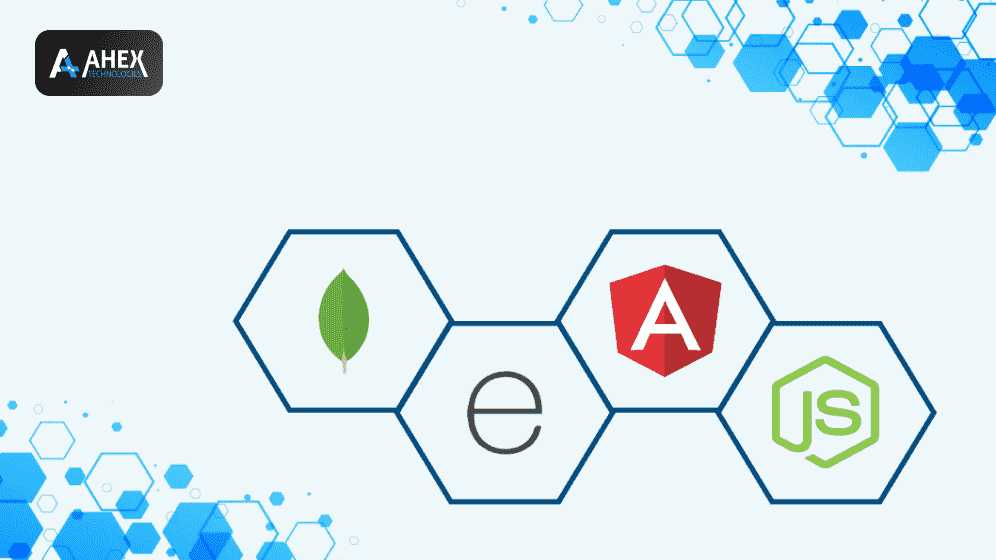
The MEAN stack (MongoDB, Express.js, Angular, and Node.js) has gained immense popularity among developers for building robust and scalable web
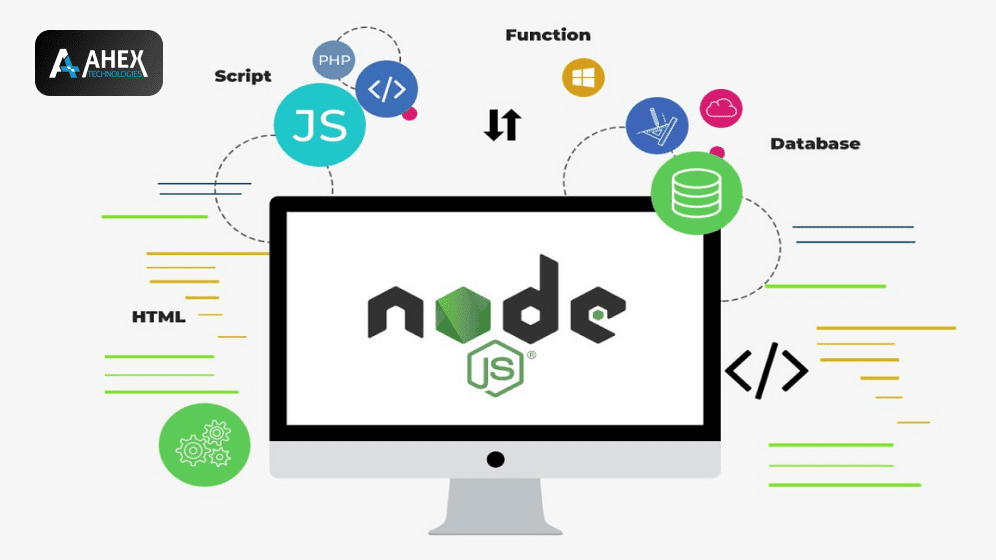
Are You Looking Node.JS empowering web development Digital Era? The world of web development has been rapidly evolving, and in
We build the part of your app that users see and click. Pages load quickly, screens adjust to any device, and each piece can be reused as your app grows.
Node.js runs the server side of your application. We build backends that handle many users at once and respond quickly, even when traffic goes up.
Express.js sits between your interface and your database. We use it to build clean routes and secure logic that keep data moving smoothly through your app.
Explore Express.js →
Your data needs a home that can grow with you. We design MongoDB databases with the right structure and indexes, so searching and saving stay fast as records increase.
We build APIs that let your MERN app talk to payment tools, CRMs, and other software. Your systems share information on their own, without manual work.
Want an app on phones too? MERN stack for mobile app projects reuse the same Node.js and MongoDB backend, with React Native handling the mobile screens.
Yes, though MERN stack for mobile app development usually means pairing the same Node.js and MongoDB backend with React Native instead of React. This lets teams reuse most of their backend logic while building a native-feeling mobile app

on top of it.
When you hire MERN stack developers, look for experience across all four layers React, Node.js, Express.js, and MongoDB not just one. Ask to see past projects and decide whether you need one developer, a small team, or a full agency.
A stack developer on a MERN project builds the entire application the interface in React, the backend logic in Node.js and Express.js, and the database structure in MongoDB. This is different from someone who only specializes in one layer.
A solid MERN stack development agency should show real MongoDB, Express.js, React, and Node.js projects, explain how they test and deploy code, and be clear about code ownership once the project wraps up.
MERN stack consulting services usually involve reviewing your current setup, advising whether MERN fits your project, and planning the architecture before development starts, often without building the app itself.
No, MERN stack development services suit small businesses building an MVP just as well as enterprises building complex platforms. Read more about MERN development and how the stack scales either way; it’s the project scope that changes.
It depends, a simple MVP can take a few weeks, while a full platform with custom features may take a few months. Reusable components and one shared language usually keep MERN builds faster than mixed-stack projects.
DEVELOPERS
YEARS IN OPERATION
GLOBAL CLIENTS


Start your digital transformation journey now and revolutionize your business